In The Shadow Of A Deadly Sky
Diego Fedele
As the war in Ukraine becomes increasingly automated, its consequences remain deeply human. The threat is often invisible within the frame itself, revealed instead through behaviour: empty streets, interrupted routines, moments of stillness. Rather than documenting combat—now largely inaccessible—this work traces the indirect presence of war. The aim is not to record hardware, but to show how individuals and communities adapt to a conflict fought increasingly at a distance.
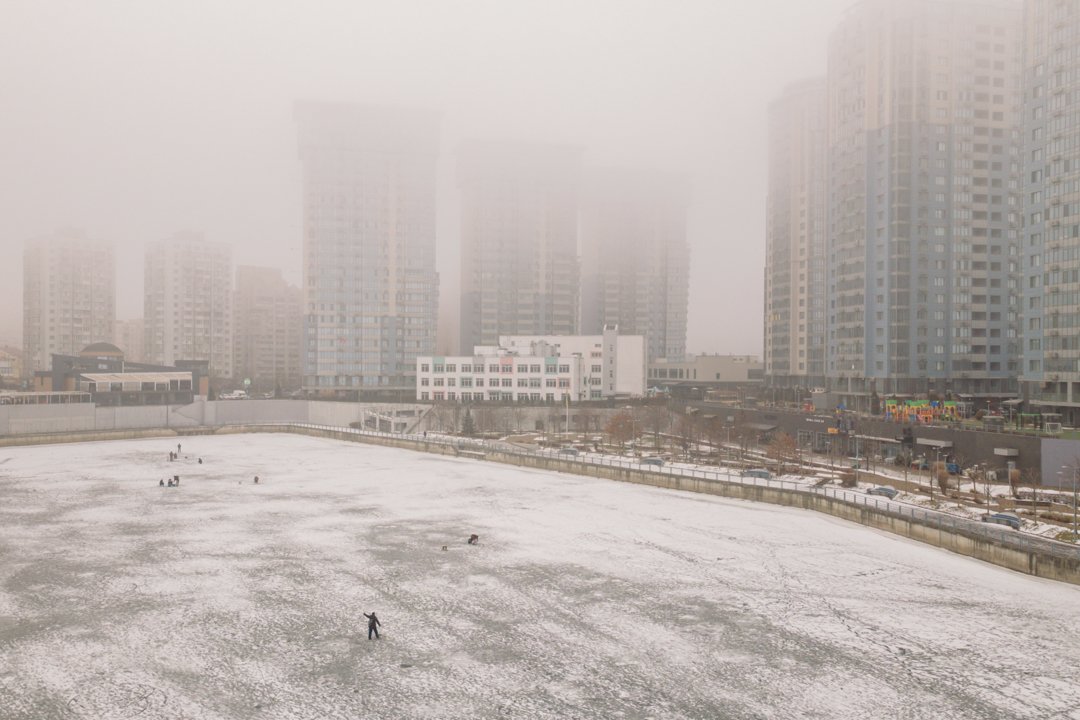
Kyiv, Ukraine, March 2, 2025. Residents ice fish on a frozen body of water in Kyiv, Ukraine, where the activity remains a common part of daily life during winter.
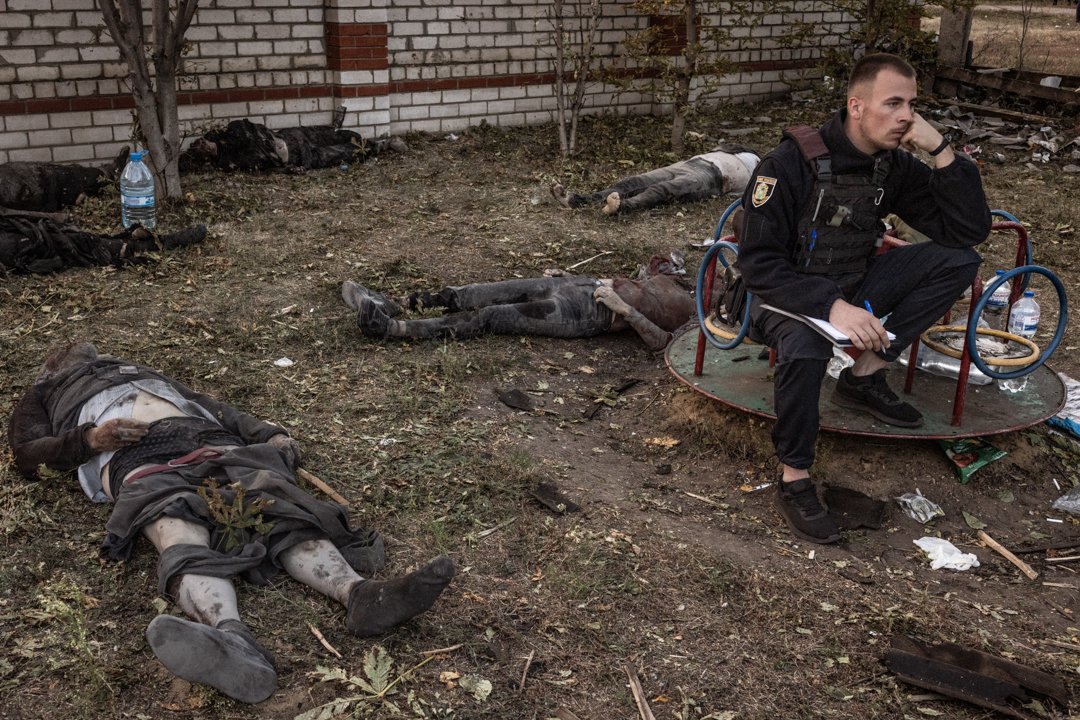
A Ukrainian police officer sits on a merry-go-round beside the bodies of civilians outside a café struck by a ballistic missile hours earlier, in the village of Hroza, Kharkiv region, Ukraine, on October 5, 2023. A Russian Iskander missile killed 59 people during a wake attended only by civilians, gathered to rebury soldier Andriy Kozyr. Hroza, near Kupiansk, liberated by Ukrainian forces in September 2022. There were no survivors in Kozyr's family. The strike was described by Kyiv as one of the deadliest attacks on civilians since the full-scale invasion.
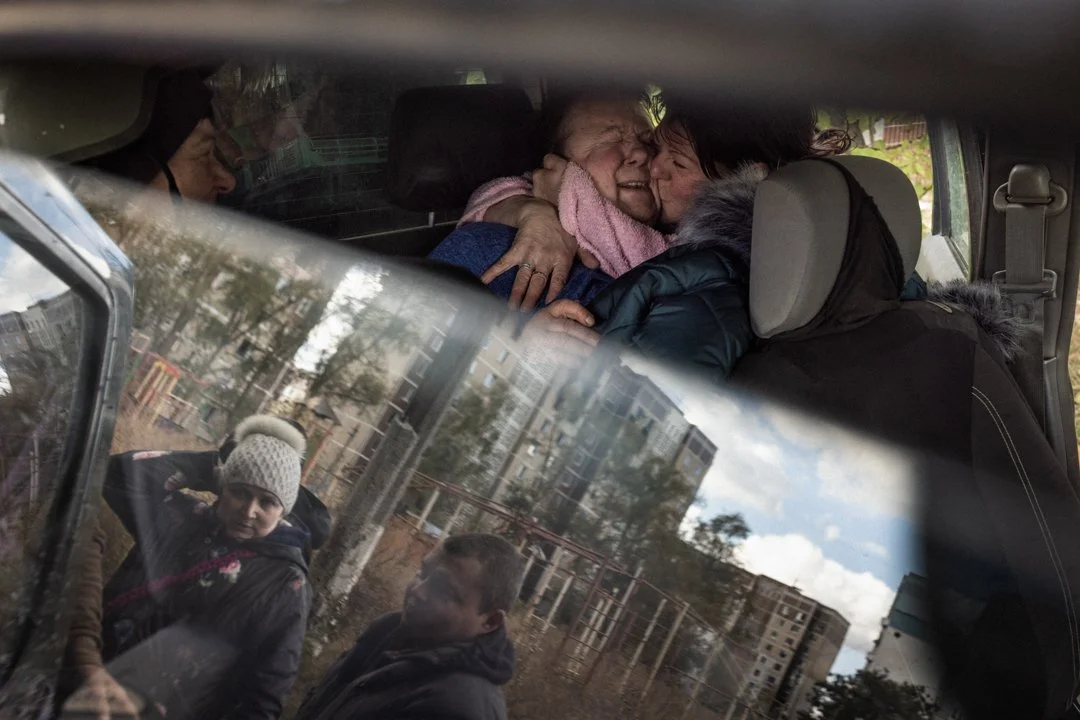
Tetiana Shvets, 62, is embraced by her friend Svitlana as she is evacuated by Ukrainian military chaplain Oleg Tkachenko from Vuhledar, Donetsk region, Ukraine, on October 19, 2023. After 20 months sheltering in a basement, she decided to leave during a lull in shelling. Built around a coal mine, Vuhledar’s high-rise buildings are largely reduced to blackened shells. The city was captured by Russian forces in September 2024.
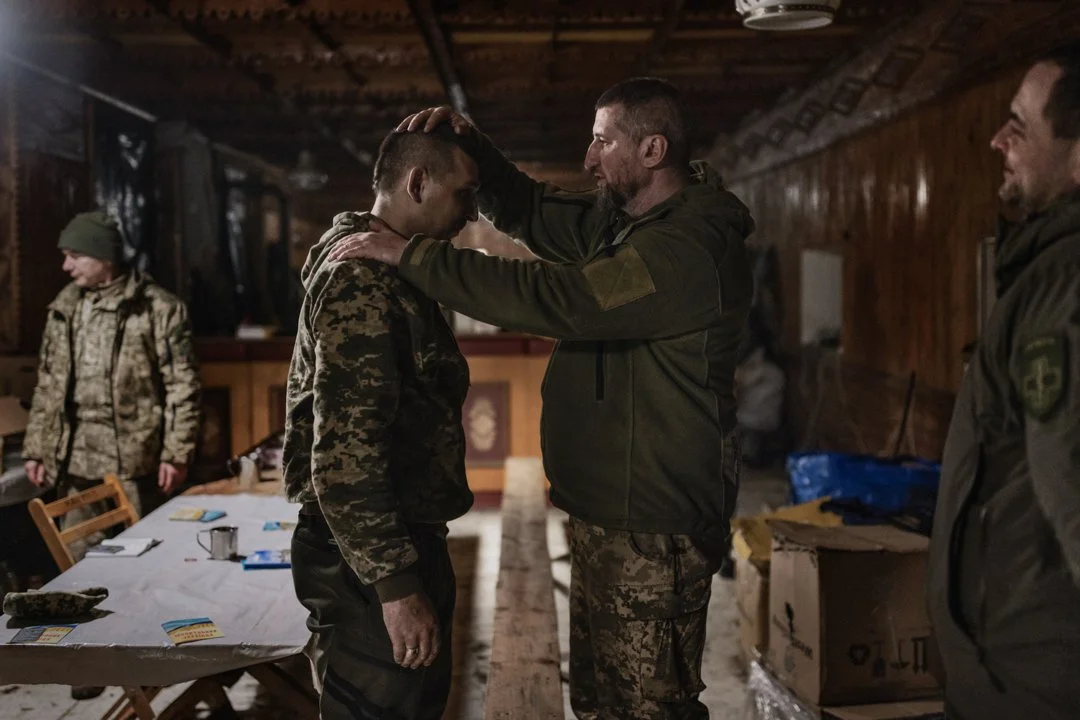
Chaplain Colonel Mykola Korsun (right) blesses combat medic Oleksandr, 30, before deployment north of Bakhmut, in Nykyforivka, Donetsk region, Ukraine, on March 2, 2023. Members of the 30th Brigade attended a mass about 15 kilometres from the frontline. The service focused on coping with the psychological toll of war.
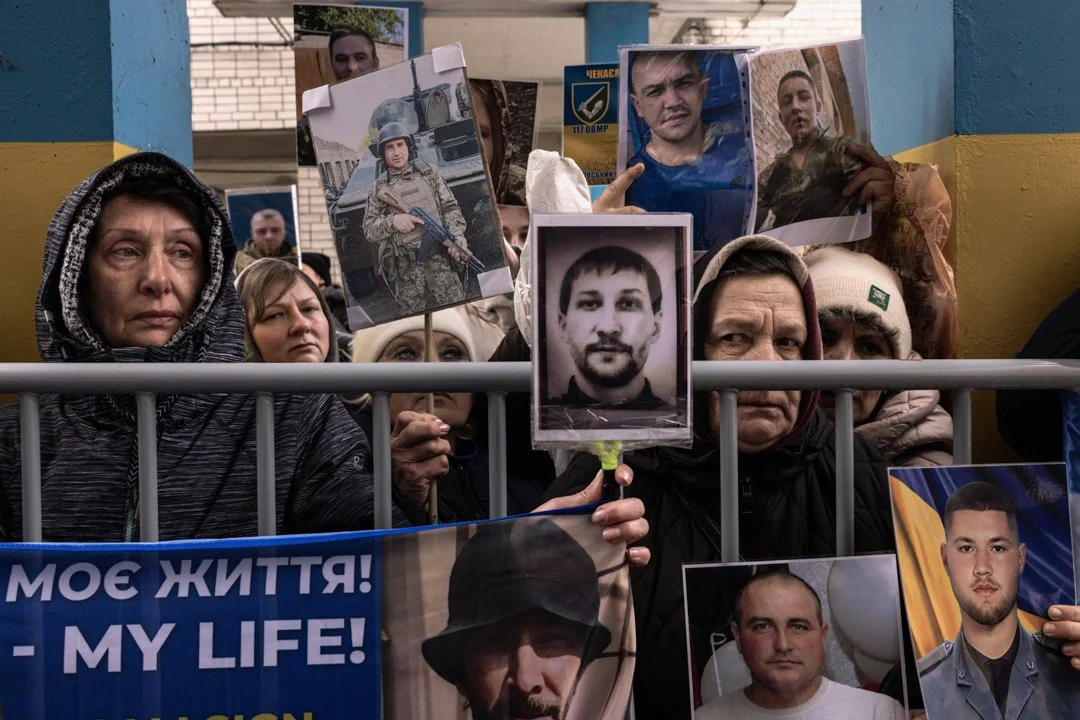
Maria (right) searches for her son, missing in the Donetsk region, as she waits for released prisoners during a Russia–Ukraine exchange in Chernihiv, Ukraine, on March 5, 2026. Recent talks involving Ukraine, Russia and the United States resulted in the return of 1,000 bodies and 500 prisoners, with limited broader progress.
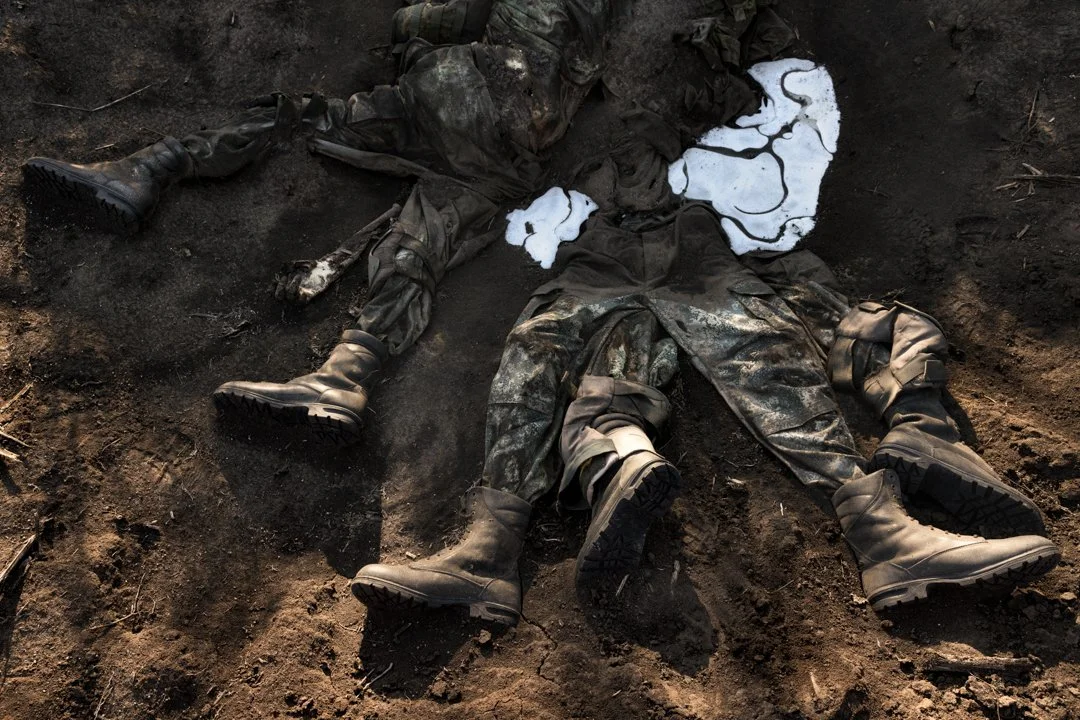
The bodies of three Russian soldiers lie in a field along the E40 highway between Sloviansk and Izyum, Kharkiv region, Ukraine, on December 6, 2022. The Ukrainian humanitarian organisation Black Tulip discovered them while recovering the dead under the threat of shelling and landmines.
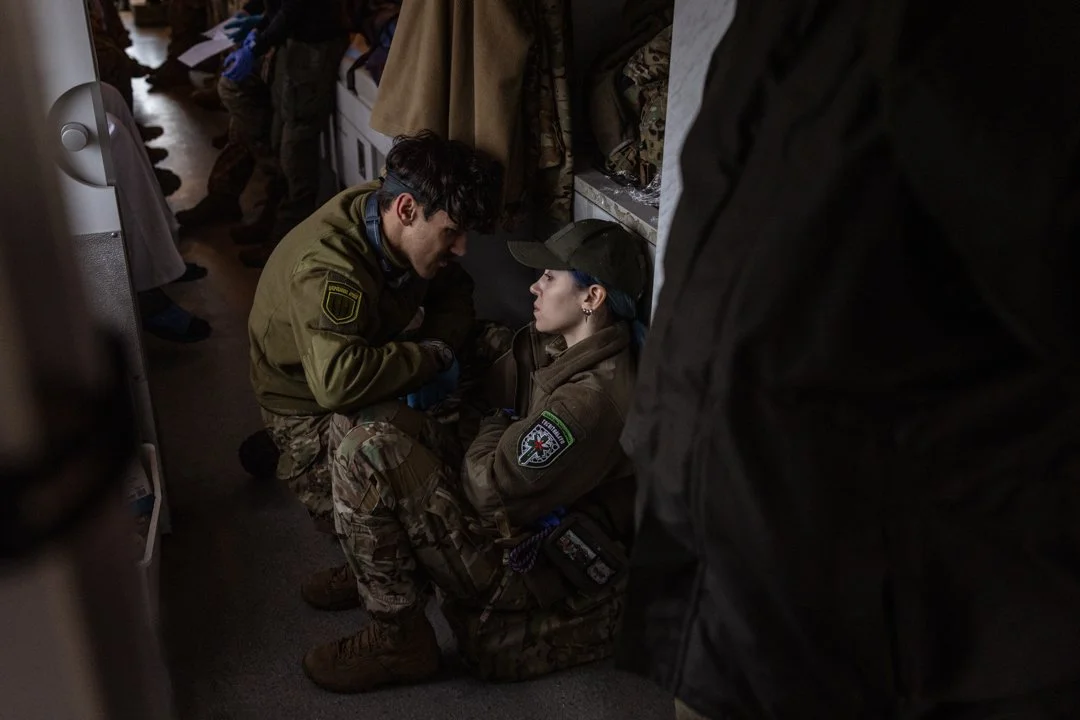
Volunteer medics from the Ukrainian organisation Hospitallers pause during a medical evacuation in Pavlohrad, Ukraine, on November 12, 2024. Working in rotations, they provide first aid and evacuate wounded soldiers, relying on donations to sustain operations across the Donbas.
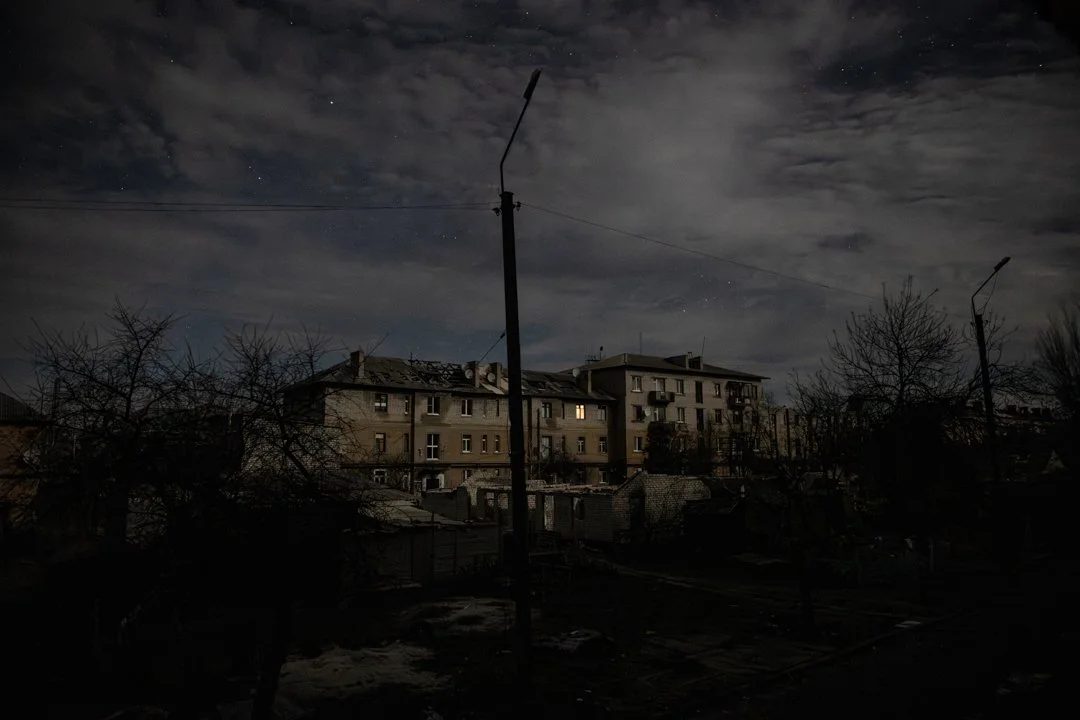
A lit window glows inside a damaged apartment building in Lyman, Ukraine, on December 1, 2022. During winter, repeated strikes on energy infrastructure left many cities in darkness after sunset. Residents relied on generators or “invincibility points” offering heat, electricity and basic services.